The Phenomenon of Solar Eclipses
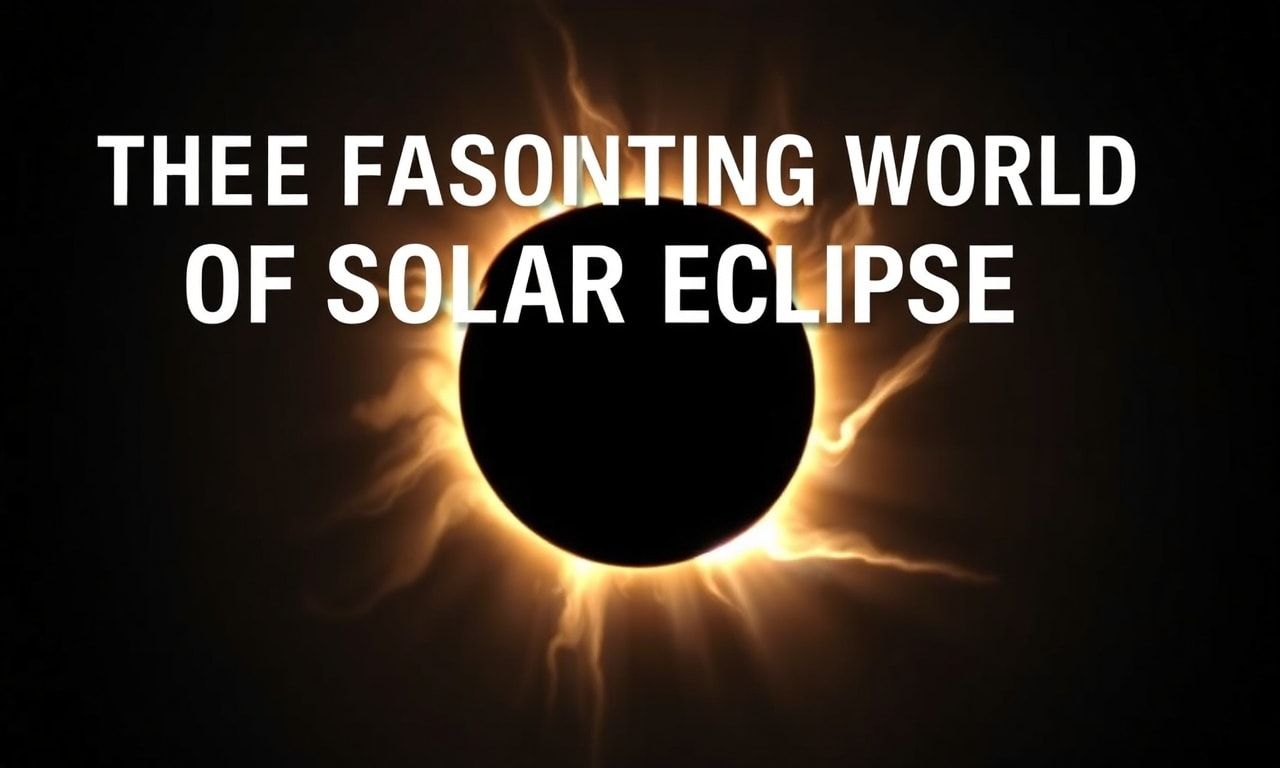
A solar eclipse is a celestial event that occurs when the Moon passes between the Earth and the Sun, obscuring the Sun either partially or completely. This natural phenomenon has captivated human imagination for centuries, inspiring myths, scientific inquiries, and awe. Understanding the mechanics behind solar eclipses not only enriches our knowledge of astronomy but also provides a deeper appreciation for the cosmos.
Types of Solar Eclipses
Solar eclipses can be categorized into three main types: total, partial, and annular. A total solar eclipse occurs when the Moon completely covers the Sun, casting a shadow on Earth and revealing the Sun’s corona. This is a rare and breathtaking event that can only be observed from a narrow path on the Earth’s surface. A partial solar eclipse happens when only a part of the Sun is obscured by the Moon, visible from a broader area. An annular solar eclipse occurs when the Moon is too far from the Earth to completely cover the Sun, resulting in a ring of sunlight around the Moon.
Total Solar Eclipses
Total solar eclipses are the most dramatic and are highly anticipated by astronomers and enthusiasts alike. During a total eclipse, the sky darkens as if it were dawn or dusk, and the temperature can drop noticeably. The next total solar eclipse visible from North America will occur on April 8, 2024, providing a unique opportunity for millions to witness this spectacular event.
Partial and Annular Eclipses
Partial solar eclipses are more common and can be observed from a larger geographical area. These eclipses provide a fascinating view of the Sun being gradually covered by the Moon. Annular eclipses, on the other hand, create a stunning ‘ring of fire’ effect, where the Moon’s apparent size is smaller than the Sun, leaving a bright ring around the darkened Moon.
Historical Significance and Cultural Impact
Throughout history, solar eclipses have been interpreted in various ways by different cultures. Ancient civilizations often viewed eclipses as omens or signs from the gods. For instance, in Chinese culture, solar eclipses were seen as celestial dragons devouring the Sun, leading to rituals and noise-making to scare away the dragon. In contrast, modern science has demystified these events, allowing us to predict and study them with precision.
For the latest updates on celestial events and other news, you can visit news today latest to stay informed about upcoming eclipses and their significance.
How to Safely View a Solar Eclipse
Viewing a solar eclipse requires caution to protect your eyes from the Sun’s harmful rays. Directly looking at the Sun, even during an eclipse, can cause permanent eye damage. Special eclipse glasses that meet the ISO 12312-2 international safety standard should be used. Alternatively, you can use a pinhole projector or a solar filter on a telescope to safely observe the eclipse.
Tips for Eclipse Viewing
Here are some tips to enhance your eclipse viewing experience:
- Plan ahead: Research the best viewing locations and weather conditions.
- Use proper eye protection: Ensure your eclipse glasses are certified and undamaged.
- Capture the moment: Use a camera with a solar filter to photograph the eclipse safely.
- Share the experience: Gather with friends or family to enjoy the event together.
Future Solar Eclipses to Look Forward To
The next total solar eclipse will occur on April 8, 2024, and will be visible from parts of North America, including Mexico, the United States, and Canada. This event is highly anticipated, as it will provide a rare opportunity for millions to witness a total eclipse. Other notable eclipses include the annular eclipse on October 14, 2023, and the total eclipse on August 12, 2026, which will be visible from the Arctic, Europe, and parts of Asia.
For more information on upcoming eclipses and other celestial events, keep an eye on news today latest to stay updated with the latest news and scientific discoveries.